5 posts
Blog
Long-form writing on the design traditions, generative systems, and engineering decisions behind Fluxcade.

Color Theory for Procedural Palettes
Why most generated palettes look bad, what the handful of working configurations actually are, and how to build a palette generator that produces usable color systems instead of random noise.
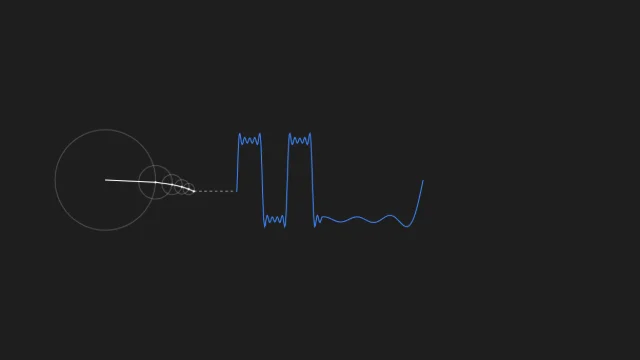
Fourier Series: Drawing With Rotations
Any closed path can be decomposed into a sum of rotating circles. The Fourier series, the epicycle construction, and why sharp corners are the hardest part of the approximation.
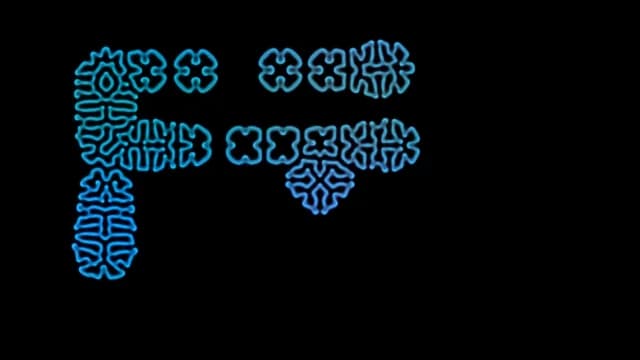
Reaction-Diffusion: Turing Patterns From Two Chemicals
How two virtual chemicals, diffusing and reacting on a grid, produce stripes, spots, and mitosis-like splitting. The Gray-Scott model, Turing's mathematical sketch, and why biology still borrows from it.
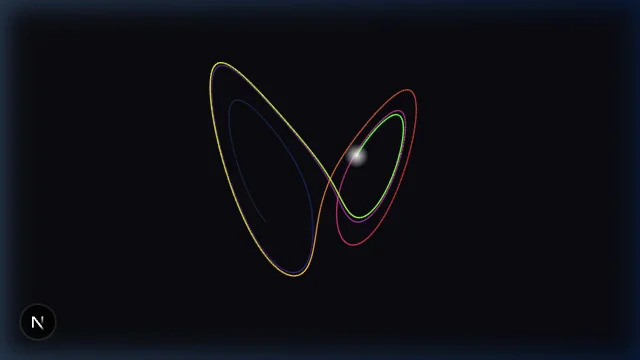
The Lorenz Attractor: A Butterfly From Three Equations
Three coupled ODEs, two parameters, and the defining picture of chaos. How the Lorenz system produces its iconic butterfly-wing trajectory — and why tiny changes in the start produce wildly different paths.
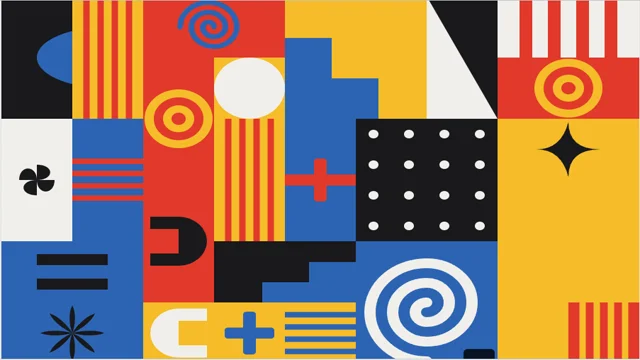
Bauhaus: A Visual Language in Fourteen Years
What the Bauhaus school actually did with form, color, and the grid — and why its visual language still shows up in posters, interfaces, and generative work today.